What to Bring to Your First Salsa or Bachata Class: A Beginner’s Dance Bag Checklist
You signed up for your first salsa or bachata class.
You know what time it starts. You have an outfit in mind. You may even have comfortable shoes ready.
Then another question appears:
What should I bring with me?
Do you need special dance shoes?
Should you pack an extra shirt?
What happens if you get sweaty, thirsty, or uncomfortable during class?
The good news is that you do not need to arrive with a professional dancer’s suitcase.
For your first class, a few practical items can help you feel comfortable, prepared, and focused on learning.
This dance bag checklist will help you bring what you need without packing more than necessary.
Do You Actually Need a Dance Bag?
Not necessarily.
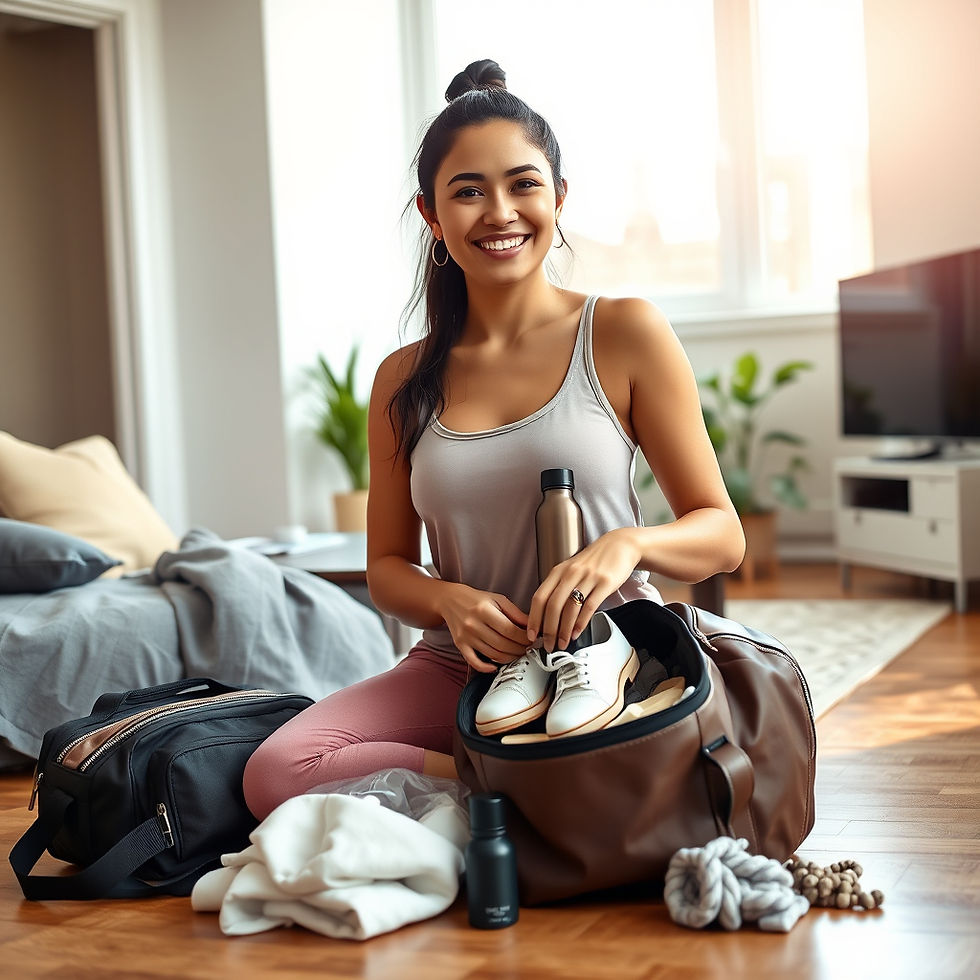
A small backpack, tote bag, gym bag, or shoe bag is usually enough.
You mainly need space for your shoes, water, personal items, and possibly a change of clothes.
Your bag does not need to be fashionable or designed specifically for dancing. It simply needs to be easy to carry and large enough to keep your belongings organized.
Try not to bring an oversized bag filled with items you will never use.
The goal is to make your evening easier, not to prepare for every possible situation.
1. Comfortable Dance Shoes
Your shoes are one of the most important things to bring.
You do not need professional salsa or bachata shoes for your first class. Many beginners start in comfortable shoes they already own.
Look for shoes that:
Stay securely on your feet
Allow you to move without slipping out
Have a smooth or moderately flexible sole
Do not feel heavy or bulky
Do not cause pain
Allow you to turn without gripping the floor too strongly
Avoid flip-flops, loose sandals, very heavy boots, and shoes with thick rubber soles that stick to the floor.
Running shoes can sometimes make turning difficult because the soles are designed for traction. A clean casual shoe with a smoother bottom may feel more comfortable for your first lesson.
If you eventually purchase dance shoes, bring them in a separate shoe bag to protect both the shoes and the inside of your dance bag.
2. A Water Bottle
Dancing is physical activity.
Even a beginner class can make you warmer than expected, especially when you are learning new movements and concentrating at the same time.
Bring a refillable water bottle so you can take small drinks during breaks.
You do not need to drink a large amount all at once. Staying lightly hydrated throughout class will usually feel better than waiting until you are extremely thirsty.
Choose a bottle that closes securely.
Discovering that your water bottle leaked over your clothes and dance shoes is not the best way to begin your first class.
3. A Small Towel
A small hand towel or fitness towel can be very useful.
Salsa and bachata classes involve movement, partner rotation, and close interaction. Sweating is completely normal.
A quick towel break can help you feel fresher and more comfortable.
You do not need to bring a full-size bath towel. A small towel that fits easily inside your bag is enough.
During class, keep it with your personal belongings rather than carrying it around the dance floor.
4. A Change of Shirt or Top
An extra shirt is one of the most useful items you can pack, especially if you plan to stay for social dancing after class.
You may not need it every time.
But when you do need it, you will be glad it is there.
Choose something lightweight that folds easily and does not take up much space.
Changing into a dry shirt can make you feel more confident, and it can also make partner dancing more comfortable for everyone.
This is especially helpful during warm evenings, longer classes, workshops, or dance socials.
5. Deodorant and Basic Hygiene Items
Partner dancing brings people into close proximity.
Good personal hygiene helps create a more pleasant experience for you and your dance partners.
Consider packing:
Travel-size deodorant
Breath mints
Dental floss
Facial wipes
Hand sanitizer
A small comb or brush
Tissues
Use these items before class or during an appropriate break.
Try to avoid applying large amounts of perfume, cologne, or heavily scented body spray. Some dancers are sensitive to strong fragrances, especially in a warm studio.
Fresh and clean is better than heavily scented.
6. Hair Ties or Clips
If you have long hair, bring a hair tie, clip, or headband.
You may enjoy dancing with your hair down, but it can become distracting once you begin turning or moving more quickly.
Long hair can also accidentally hit you or your partner during turns.
You do not have to wear your hair in a tight or complicated style. A simple ponytail, braid, bun, or clip can keep it controlled while you dance.
It is a good idea to bring one extra hair tie in case the first one breaks.
They take almost no space and can save your entire evening.
7. Blister Protection
New shoes and extended dancing can sometimes cause irritation.
Pack a few adhesive bandages or blister cushions, especially when wearing unfamiliar shoes.
Do not wait for a small uncomfortable spot to become a painful blister.
If your shoes begin rubbing, take a break and address the problem early.
Pain is not something you need to push through to become a better dancer.
Comfortable practice is usually more productive than forcing yourself to continue while injured.
8. Clean Socks or Foot Liners
Even when you do not plan to dance in socks, an extra clean pair can be helpful.
You may decide to change shoes before or after class. Your feet may become warm. Your original socks may not feel comfortable after dancing.
Some dancers also wear thin socks or foot liners inside certain types of practice shoes.
Choose whatever keeps your feet secure and comfortable.
Avoid dancing around the studio in loose socks unless the instructor says it is safe. Socks can be slippery and may not provide enough support.
9. A Shoe Brush, If You Wear Suede Soles
This item is only necessary if you own dance shoes with suede soles.
A suede shoe brush removes dirt and restores some of the texture underneath the shoe.
This helps you maintain an appropriate balance between sliding and traction.
Do not use the brush on your skin, clothes, or other personal items. The bristles are sharp.
Keep it covered or stored in a separate compartment.
Beginners wearing regular shoes do not need to purchase a shoe brush before their first class.
10. A Light Layer
Dance studios can feel warm while you are moving and cool once you stop.
Bring a light sweater, jacket, or cover-up that is easy to remove.
This is especially useful before class, during longer breaks, or when leaving the studio at night.
Choose something that fits inside your bag or can be tied around it.
You probably will not want to dance in a heavy jacket, but you may appreciate having one afterward.
11. Your Phone—But Keep It Away During Class
Your phone may contain your registration confirmation, directions, parking information, or payment details.
It can also be useful for writing down the name of a song or recording a short practice demonstration when the instructor gives permission.
During the actual lesson, keep your phone silent and stored safely.
Checking messages while the instructor is explaining a movement can cause you to miss important information.
It can also make your partner feel as though you are not present.
Give yourself permission to disconnect for the length of the class.
The emails and notifications will still be there afterward.
12. A Small Snack
You may want to bring a simple snack if you are attending class directly after work or staying for several hours.
Good options include something light and easy to eat, such as:
A banana
A granola bar
Crackers
A small protein snack
Dried fruit
Avoid eating a very heavy meal immediately before dancing.
At the same time, arriving hungry can leave you feeling tired, distracted, or lightheaded.
Try to eat enough to feel energized without feeling overly full.
13. Payment or Registration Information
Many studios use online registration, but it is still helpful to have your confirmation available.
Check whether the class requires:
Advance registration
An electronic ticket
A membership card
Cash
Identification
A waiver
Complete any forms before arriving when possible.
This helps you check in calmly instead of searching through emails while class is beginning.
What Women May Want to Bring
Every dancer has different needs, but women may find these items helpful:
Extra hair ties
Blister cushions
Fashion tape
A small makeup or toiletry pouch
A backup pair of flats
A change of top
Foot liners
Menstrual products
Fashion tape can be especially helpful when wearing a top or dress that shifts while moving.
Your outfit should allow you to raise your arms, turn, bend your knees, and move comfortably without constant adjustment.
What Men May Want to Bring
Men may find these items useful:
An extra shirt
A small towel
Deodorant
Breath mints
Clean socks
A comb
A light undershirt
For many men, an extra shirt is the most valuable item in the bag.
If you sweat heavily, you may want to pack two.
Changing shirts between class and social dancing is a simple gesture that can make partner dancing much more comfortable.
What You Can Leave at Home
You do not need to pack everything you own.
For most beginner classes, you can leave behind:
Expensive jewelry
Large amounts of cash
Valuable accessories
Multiple complicated outfits
Heavy bottles of perfume or cologne
Several pairs of shoes
Professional dance equipment you do not know how to use
Anything you would be worried about leaving unattended
Keep your bag simple.
The less time you spend managing your belongings, the more attention you can give to your class.
A Simple First-Class Checklist
Before leaving home, check that you have:
Comfortable, secure shoes
Water
A small towel
Deodorant
Breath mints
A hair tie, if needed
Bandages or blister protection
A change of shirt or top
Your registration information
A light sweater or jacket
A positive attitude
That last item matters.
You are not expected to arrive knowing how to dance.
You are coming to class because you want to learn.
What Matters More Than Anything in Your Bag
It is easy to become focused on preparation.
You may worry about choosing the perfect outfit, buying the correct shoes, packing every possible personal item, or looking like you belong.
But the most important thing you can bring is a willingness to be a beginner.
You may step in the wrong direction.
You may forget the count.
You may feel awkward when rotating to a new partner.
None of that means you are doing badly.
It means you are learning.
The right shoes and a bottle of water can help you feel comfortable, but confidence develops by showing up, practicing, and giving yourself time.
Ready for Your First Salsa or Bachata Class?
You do not need expensive equipment, professional dance shoes, or years of experience to begin.
Pack a few practical essentials, wear something comfortable, and arrive with enough time to settle in before class starts.
At LA Salsa & Bachata Dance Academy, our beginner-friendly classes in Santa Monica are designed to help you learn step by step.
We focus on timing, movement, partner connection, and practical skills you can use on the social dance floor.
Students join us from Santa Monica, West Los Angeles, Brentwood, Culver City, Venice, Westwood, and throughout the Westside.
Come alone or bring a partner.
Bring your water, your comfortable shoes, and your curiosity.
We will help you with the rest.


